
Mission
To help children, families, schools, and organizations build more joyful, accessible, and human-centered learning systems through cooking, baking, literacy, SEL, executive functioning, and real-life skill development.
Vision
A world where learning feels safe, practical, creative, and connected to real life — especially for neurodivergent learners, disabled children, and families navigating systems that were not always designed with them in mind.
About Calvin Eaton
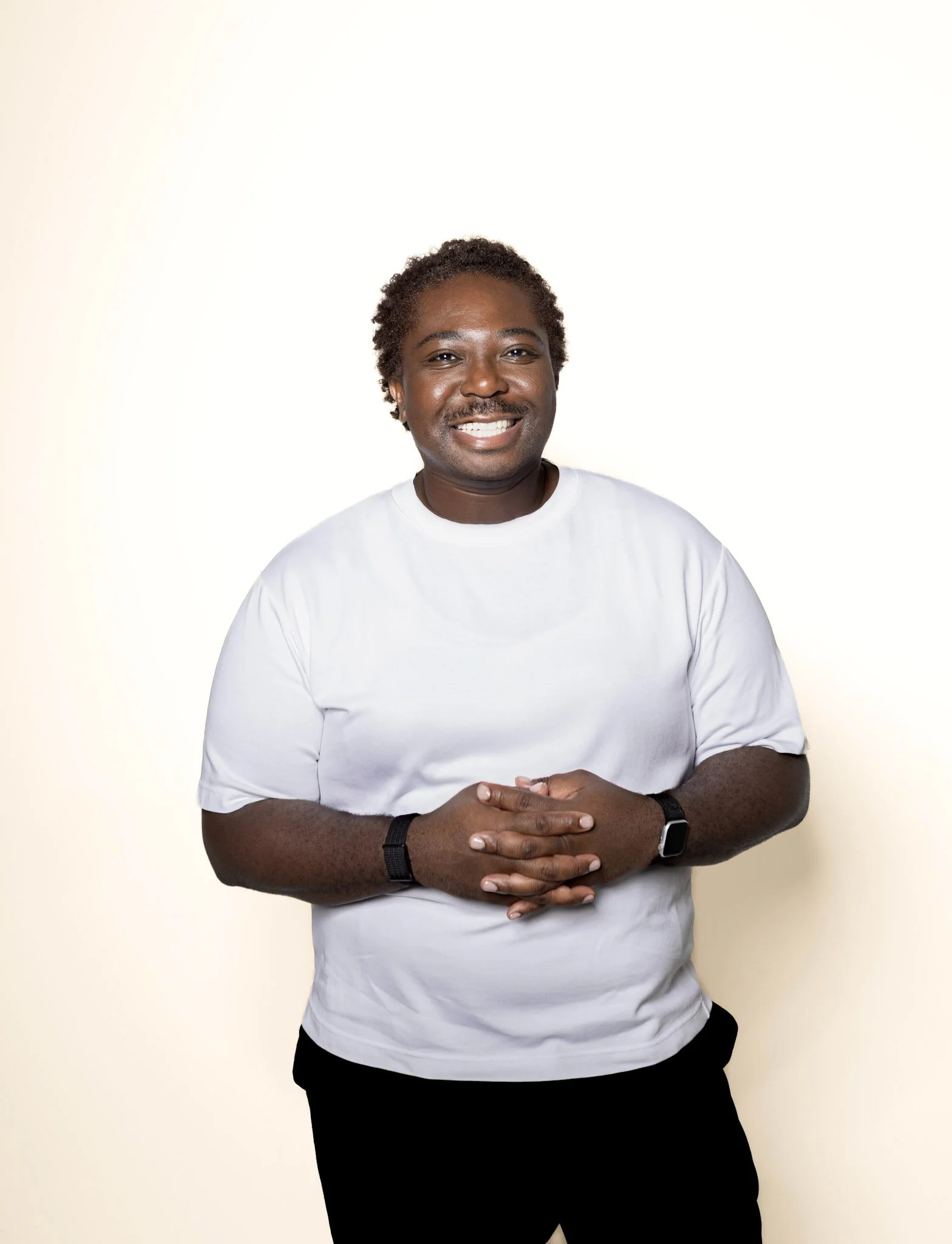
Hi. I’m Calvin.
I am a disabled, neurodivergent Black teacher, writer, researcher, and entrepreneur with more than 15 years of experience in education.
My work explores how children learn and how we can create more accessible, joyful, and human ways of teaching. I bring together classroom practice, ongoing research, lived experience, culinary creativity, and systems thinking.
Today, much of my work centers on Food as Curriculum™ and Recipes as Curriculum™ using cooking and baking to build literacy, math, science, executive functioning, self-regulation, and practical life skills.
As a learning consultant, I work with children, families, schools, and organizations through tutoring, consulting, professional learning, writing, and curriculum development.
At the heart of my work is a simple question: How can we make learning work better for the whole person?

"Calvin's presentation and facilitated conversation, which centered around understanding implicit bias in education, was a pivotal experience for our teachers and staff. Calvin's experience and expertise in this domain were obvious throughout the planning process, as well as in session; we were confident in his work the entire time. The preparation materials that he provided our staff were instrumental to framing the workshop, and the workshop itself offered our teachers a supportive opportunity to explore critical conversation around challenging topics, while also challenging comfort zones and prompting accountability to self-inquiry. Calvin's work is invaluable, and is an asset to our community at the individual and collective level!"
— Isabel, Montessori School of Rochester | Rochester, NY
About My Disability
I live with fibromyalgia, myalgic encephalomyelitis/chronic fatigue syndrome (ME/CFS), and mast cell activation syndrome (MCAS). Together, they affect pain, energy, mobility, and how safely I can move through everyday environments.
What this looks like for me
I began experiencing widespread pain and profound fatigue in 2010. At the time I was in my early twenties, had purchased my first home and building my life as a young adult. Symptons started gradually, then over the course of a year slowly became debilitating. I was diagnosed with fibromyalgia and ME/CFS in the fall of 2011. Fibromyalgia brings chronic pain, tenderness, fatigue, sleep disruption, and cognitive symptoms into my daily life. ME/CFS adds a different layer. Physical or mental exertion can worsen symptoms afterward, sometimes for days or longer. Pacing is not simply "taking it easy." It is part of how I protect my energy and reduce the risk of a crash.
My diagnosis of Mast Cell Activaiton Syndrome came recently in June 2026. Understanding the immunologic connection to many of my symptoms has truly been a game changer for me un understanding my body and how to manage symptoms. For me, environmental triggers such as pollen, mold, dust, fragrances, and smoke can trigger symptoms, so masking is one of the ways I reduce exposure and make more spaces usable.
Mobility Aids Help Me Participate
I use mobility aids because they help me conserve energy, reduce pain and fatigue, and participate more fully in my life and work. My scooter is especially useful in the community. Other mobility options make more sense at home or in spaces where a larger scooter is impractical. Access is not one device or one solution. It changes with the setting and with my body.
Living this way has made me very aware of the difference between something being technically available and something being genuinely usable. A space can meet an accessibility requirement and still demand too much energy, money, planning, or explanation from the person trying to use it.
Writing My Way Through Chronic Illness
I have been writing about chronic illness for more than a decade. In 2013, I published Living with Fibromyalgia: A Young Man’s Journey to Peace, Inspiration, and Empowerment Through Poetry and Uplifting Words, my first poetry collection. I wrote it while I was still learning how to live inside a body that could change dramatically from day to day.
That early work gave me a language for pain. My writing now reaches further into disability, access, race, education, food, and the systems that shape how people move through the world.
Why This Matters to My Work
Disability is not a side note to my work. It shapes how I teach, design, write, cook, plan, and build. It is why I care about pacing, sensory access, clear information, multiple ways to participate, and environments that do not require people to prove their needs before they are taken seriously.
Explore My Work →
Sources & Further Reading
These sources informed the health descriptions and biographical details above.
U.S. Pain Foundation — Anti-Racism Educator Fights for Fair Treatment in Health Care—and Beyond
U.S. Pain Foundation — Pain Warrior of the Month: Calvin Eaton
CDC — Managing ME/CFS and Post-Exertional Malaise